Signs a Tree May Be Hazardous
A hazardous tree isn't always obvious. Contact us if you notice:
Dead or dying branches
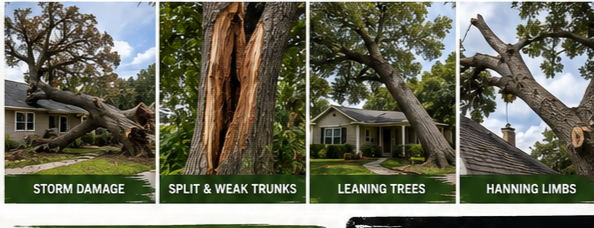
Large cracked limbs
Deep trunk cavities
Leaning trees
Root damage or upheaval
Mushroom or fungal growth near the base
Trees damaged by storms or lightning
Split trunks or multiple stems separating
Hanging or broken limbs
Trees growing too close to structures or power lines

Hazardous Tree Removal Process
1. Property Inspection
We evaluate the tree's condition, surrounding hazards, and the safest removal method.
2. Safety Planning
Our crew develops a removal strategy to protect buildings, vehicles, utilities, landscaping, and pedestrians.
3. Precision Removal
Using climbing techniques, cranes, rigging systems, bucket trucks, and specialized equipment, we remove the tree one section at a time.
4. Complete Cleanup
All debris is removed, and your property is left clean and ready for normal use.
We Remove Hazardous Trees Near
Homes
Apartment Complexes
Office Buildings
Parking Lots
Swimming Pools
Fences
Garages
Sidewalks
Roadways
Power Lines
Commercial Properties
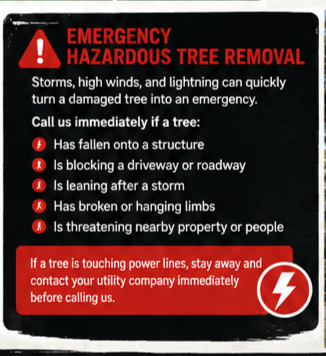
Emergency Hazardous Tree Removal
Storms, high winds, and lightning can quickly turn a damaged tree into an emergency.
Call us immediately if a tree:
Has fallen onto a structure
Is blocking a driveway or roadway
Is leaning after a storm
Has broken or hanging limbs
Is threatening nearby property or people
If a tree is touching power lines, stay away and contact your utility company immediately before calling us.